Hey there! As a supplier of servo hydraulic cylinders, I often get asked about the communication interfaces of a servo hydraulic cylinder control system. So, I thought I'd write this blog to share some insights on this topic.
First off, let's understand what a servo hydraulic cylinder control system is. It's a system that uses hydraulic power to control the movement of a cylinder with high precision. This is super important in a lot of industrial applications, like manufacturing, automation, and even in some heavy machinery.
Now, onto the communication interfaces. There are several types, and each has its own pros and cons.
CANopen Interface
CANopen is a really popular communication interface in the servo hydraulic cylinder control world. It's based on the Controller Area Network (CAN) protocol, which is known for its reliability and robustness.
One of the great things about CANopen is its flexibility. It allows for easy configuration of the servo hydraulic cylinder control system. You can set up different parameters like speed, force, and position with relative ease. This is especially useful when you need to customize the operation of the cylinder for different tasks.
Another advantage is its ability to handle multiple devices on the same network. In an industrial setting, you might have several servo hydraulic cylinders working together. With CANopen, you can connect all of them to a single network, making it easier to manage and control them.
However, CANopen does have some limitations. It has a relatively low data transfer rate compared to some other interfaces. So, if you need to transfer a large amount of data quickly, it might not be the best choice.
EtherCAT Interface
EtherCAT, or Ethernet for Control Automation Technology, is another widely used interface. It's based on Ethernet technology, which means it has a high data transfer rate. This is a huge advantage when you need to control the servo hydraulic cylinder in real - time.
With EtherCAT, you can get very precise control over the cylinder's movement. It can handle high - speed data transmission, which is crucial for applications where quick response times are needed. For example, in a high - speed manufacturing process, you need the servo hydraulic cylinder to respond instantly to changes in the control signals.

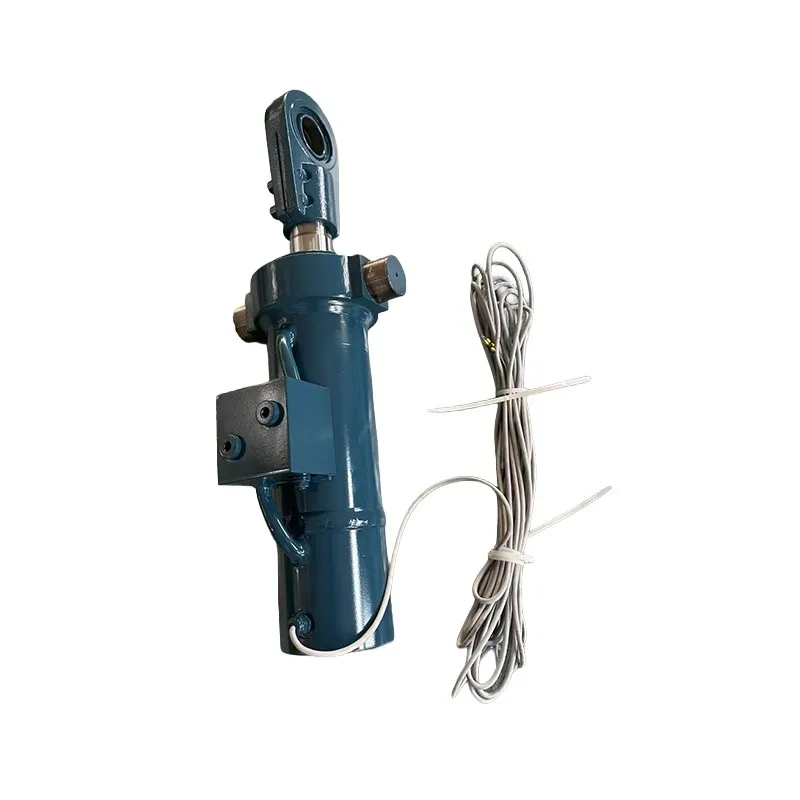
EtherCAT also has good scalability. You can easily add or remove devices from the network without causing major disruptions. This makes it a great choice for systems that might need to be expanded or modified in the future.
But, like any technology, EtherCAT has its drawbacks. It can be a bit more complex to set up and configure compared to CANopen. You need to have a good understanding of Ethernet technology and the EtherCAT protocol to get the most out of it.
Profibus Interface
Profibus is a well - established communication interface in the industrial automation field. It's known for its simplicity and reliability.
One of the main advantages of Profibus is its wide compatibility. It can work with a variety of devices, including servo hydraulic cylinders. This makes it easy to integrate the cylinder into an existing industrial control system.
Profibus also has a relatively long communication distance. This is useful in large industrial facilities where the servo hydraulic cylinder might be located far from the control unit.
However, Profibus has a lower data transfer rate compared to EtherCAT. And, it might not be as flexible as CANopen when it comes to configuration.
Modbus Interface
Modbus is a simple and widely used communication protocol. It's easy to implement and understand, which makes it a popular choice for smaller servo hydraulic cylinder control systems.
With Modbus, you can easily read and write data to the servo hydraulic cylinder's control unit. This allows you to monitor and adjust the cylinder's operation parameters.
Modbus is also very cost - effective. It doesn't require expensive hardware or complex software to operate.
But, Modbus has limitations in terms of data transfer speed and the number of devices it can support on a single network.
Now, let's talk about our products. We offer a range of servo hydraulic cylinders, including Welded Body Servo Actuator, Servo Press Cylinder, and Servo Tie - Rod Cylinder. These cylinders are designed to work with different communication interfaces, giving you the flexibility to choose the one that best suits your needs.
If you're in the market for servo hydraulic cylinders and want to learn more about how they can be integrated with different communication interfaces, we'd love to have a chat with you. Whether you're working on a small - scale project or a large industrial application, our team of experts can help you find the right solution.
In conclusion, the choice of communication interface for a servo hydraulic cylinder control system depends on several factors, such as the required data transfer rate, the complexity of the system, and the budget. Each interface has its own strengths and weaknesses, and it's important to choose the one that best fits your specific requirements.
If you're interested in purchasing our servo hydraulic cylinders or need more information about the communication interfaces, feel free to reach out. We're here to help you make the best decision for your project.
References
- "Industrial Communication Networks: Principles and Applications" by Dieter Faulhaber
- "CANopen: The Standard for Industrial Communication" by CAN in Automation (CiA)
- "EtherCAT Technology Handbook" by Beckhoff Automation
- "Profibus: A Guide to the World's Most Widely Used Fieldbus" by Siemens
- "Modbus Protocol Specification" by Modbus Organization